

Apostles & Elders
Restoring the Church to the Original Blueprint
This is a picture of the ancient Council of Jerusalem Acts 15.
Restoring New Testament
Apostles & Elders — And Why It Matters
Apostles—What The Charismatics and Cessationists Get Wrong
Recovering the True Apostolic Ministry
Virtually every stream of Christianity misunderstands apostles — Charismatic or Cessationist, believer or skeptic. Yet if you can grasp this single truth, hidden in plain sight since the close of the first apostolic age, you can step into Jesus’ present work of rebuilding His Church according to the original Blueprint.
In 1972, the Father spoke a word to me that I did not fully understand at the time, but which frames everything in this article:
“Rick, I am restoring the apostles and prophets, and most of the Church will miss them for the same reason most of the Jews missed My Son — because they expect them to do something different than what I am sending them to do.”
Those words have guided my study of Scripture for over fifty years.
Because if you don’t understand the structure of Jesus’ Church, how the government is to function so that the ministries can thrive, and the Saints be equipped — then you are part of the problem, not part of the solution, as Jesus rebuilds His Church..
Before we can rediscover what apostles do, we must first recover what an apostle is.
Because until the definition is restored, the ministry will remain distorted.
This article restores the Hebrew foundations of apostolic ministry — the way the Father intends and the way Jesus and Paul carried it out. It corrects the Greek misunderstandings that shape modern teaching, explains the four New Covenant apostolic functions, reveals the Trinitarian origin behind every true apostle sent by the risen Messiah, and clarifies why modern claims — especially the ideas of governing apostles and female apostles — misunderstand the divine Blueprint for Jesus’ Church as revealed by Christ and laid by His apostles and prophets.
I. Why the Hebrew Definition of “Apostle” Is Correct — and the Greek One Misleads Us
Why begin with the Hebrew?
Because the Scriptures were written by Jews, from within a Jewish worldview, to Jews and to Gentiles who have been grafted into Messiah and brought into the commonwealth of Israel.
Paul reminds us:
“You were… alienated from the commonwealth of Israel and strangers to the covenants of promise…
But now in Messiah Jesus you who once were far off have been brought near…” Ephesians 2:12–13
“So then you are no longer strangers and aliens,
but fellow citizens with the saints and members of the household of God.” Ephesians 2:19
If we miss this reality, we cannot fully understand the New Testament.
When Jew or Gentile is born again, we are not converted to a religion called Christianity, nor do we join the Judaism that existed during Jesus’ earthly ministry. Rather, we are:
- grafted into Messiah,
- joined to Israel’s covenants,
- made part of the Father’s household,
- and placed within the commonwealth of Israel.
This means:
- Jesus taught as a Jewish Rabbi
- The apostles thought in Jewish categories
- The early ekklesia interpreted everything through a Hebrew worldview of the Hebrew Scriptures
- And the apostolic role comes from the Hebrew legal term שָׁלִיחַ (shaliach) long before ἀπόστολος (apostolos) was used in Greek
Begin with Greek alone and you will misunderstand the apostolic ministry.
Begin with the Hebrew shaliach and the entire Apostolic Blueprint becomes clear again.
Nearly all confusion about apostles — from Charismatic excess to Cessationist denial — arises from beginning with the Greek definition (apostolos) while ignoring the Hebrew original (shaliach).
1. The Hebrew Word Behind “Apostle”: שָׁלִיחַ (Shaliach)
Jesus and His apostles operated within a Jewish worldview, not a Greek one. The foundational concept was the deeply rooted legal and relational term:
שָׁלִיחַ (shaliach) — “one sent as the personal representative of another.”
Ancient Jewish principle:
“A man’s shaliach is as the man himself.”
(Mishnah, Berakhot 5:5; Kiddushin 2:1)
Meaning:
- The shaliach (Ephesian 4:11 apostle) carries the sender’s authority.
- He speaks with the sender’s voice.
- He brings the sender’s decision, doctrine, correction, or blessing.
- To receive the shaliach is to receive the sender (John 13:20).
This is the framework Jesus used when He commissioned the Twelve, sent the Seventy, and the gifted the apostles of Ephesians 4:11.
This is the biblical foundation for understanding apostles.
2. The Greek Word ἀπόστολος (Apostolos) Is True — But Insufficient
The Greek word simply means: “sent one.”
But in Greek culture:
- sailors were apostoloi
- emissaries were apostoloi
- cargo ships were apostolic ships
The term is functional but generic.
When modern scholars, Charismatic leaders, or Cessationists start with the Greek meaning alone, they inevitably reduce “apostle” to:
- Church government
- a missionary
- a pioneer
- a strategist
- a church leader
- or a church planter
This is how the Charismatic church ended up with:
- apostolic centers
- apostolic covering
- apostolic networks
- marketplace apostles
- territorial apostles
- female apostles
- and the entire NAR superstructure
None of which appear in Scripture.
3. The Hebrew Shaliach Makes Apostolic Ministry Unmistakable
When we start with the Hebrew concept:
- Apostles represent Jesus, not institutions or churches.
- Apostles are sent to elders, not over them.
- Apostles deliver Christ’s doctrine, order, correction, and equipping.
- Apostles are Christ’s personal agents to local church governments.
This perfectly explains Paul’s ministry, the Book of Acts, and Ephesians 4:11.
The Hebrew definition:
- preserves Christ’s headship,
- preserves elders’ in charge of Jesus’ government,
- clarifies the apostolic role,
- and dismantles modern apostolic hierarchies.
4. Why Charismatic and Cessationist Teachers Miss This
Both Charismatics and Cessationists make the same foundational mistake, but express it in opposite directions.
Charismatics misinterpret apostles as hierarchical power figures.
They create governing apostles, territorial apostles, apostolic centers, apostolic networks, apostolic “covering,” and fivefold “CEOs” — none of which appear in Scripture. They see the apostle in a glorified role and not as a humble, foundational servant of Messiah.
Cessationists reject apostles entirely.
They collapse all apostolic ministry into the Twelve, deny that Ephesians 4:11 continues today, and flatten the ongoing post-ascension ministry of Messiah into the first century.
Yet both groups fall into error for the same three reasons:
Reason #1 — They Base Their Teaching on the Greek Term, Not the Hebrew Identity
The modern debate begins with the Greek word for apostle (apostolos, “sent one”), rather than the Hebrew identity Jesus actually used — the shaliach, the legally authorized representative who carries the sender’s authority.
Because the Greek category is too generic, both groups end up with distorted conclusions:
- Charismatics exaggerate apostolic authority
- Cessationists eliminate apostolic ministry
Recover the Hebrew identity already established earlier — the shaliach — and the apostolic Blueprint makes immediate sense.
Reason #2 — They Confuse the Pre-Ascension Apostles with the Post-Ascension Apostles
Most teachers never distinguish between the two:
1. Pre-Ascension Apostles
- The original 11 plus Matthias (I’ve written before on why Matthias counts here)
- chosen during Jesus’ earthly ministry
- eyewitnesses of His resurrection
- unique, non-repeatable role in salvation history
2. Post-Ascension Apostles (Ephesians 4:11)
- given by the risen Christ after His ascension
- appointed as shaliachim to establish elders, order, doctrine, and equipping
- ongoing throughout the Church age
These two categories overlap in function, but they are not identical.
- The Twelve were eyewitnesses.
- Paul was not — yet he was an apostle appointed by the ascended Christ.
- Ephesians 4:11 ministries continue “until we all come” into unity, maturity, and fullness (Ephesians 4:13) — something the Church has not yet reached.
Charismatics collapse these two into an office of hierarchical control.
Cessationists collapse these two into a past historical category.
Reason #3 — They Do Not Understand How Jesus’ Church is Structured
Church Structure — The Order of Melchizedek
Jesus is both King and Priest, after the order of Melchizedek (Psalm 110:4; Hebrews 7:1–3).
This is the key to understanding the true structure of His Church—the divine blueprint that was established in the first century apostolic church and then gradually lost after the second generation of leaders.
What the apostles built was order by revelation—a living government and ministry patterned after the dual nature of Christ.
But as the early Church drifted from its Hebraic foundation, this balance between kingly government and priestly ministry was replaced by hierarchy, position, and human control.
Expanding on Church Structure
The Kingly Side — Government
The kingly side of Christ’s order represents government, oversight, and stewardship.
In the New Testament pattern, this government is vested in a plurality of elders at the local level—mature men who shepherd, guide, and protect the flock.
Deacons, chosen by the people, serve as ministers of practical care and administration (Acts 6:1–4).
Neither elders nor deacons are required to hold one of the Ephesians 4:11 ministry gifts, nor does possessing such a gift automatically qualify one for eldership or deaconship.
Government and ministry are distinct functions under one Head—Christ.
The Priestly Side — Ministry
The priestly side of Christ’s order represents ministry, service, and spiritual equipping.
Here we find the Ephesians 4:11 ministries—apostles, prophets, evangelists, shepherds, and teachers—given by the risen Lord to build, equip and mature His Body.
These are not offices to be appointed by men but callings determined before the foundation of the world (Ephesians 2:10; Romans 11:29).
A person may mishandle or misunderstand their calling, speak presumptuously, or fail to mature in it—and still be saved—but the gift itself remains irrevocable.
This reveals both the mercy and the justice of God: His gifts do not depend on human perfection, yet they will be judged by divine standard.
What Was Lost
The first Church walked in this balance—elders governing locally, apostles and prophets establishing foundations, evangelists expanding the kingdom, shepherds and teachers nurturing the saints.
But after the second generation of leaders, that pattern began to erode.
The Hebraic understanding of covenant order gave way to a Greek model of hierarchy, where titles replaced functions and authority became positional rather than relational.
By the time of the fourth century, the simple structure of elders, deacons, and fivefold ministers had been replaced by bishops, priests, and popes.
What began as a living body became an institution.
How the Pattern Was Lost
The erosion of divine order did not happen overnight—it unfolded gradually, as the Church moved from revelation to reason, from covenant thinking to philosophical thinking.
By the end of the first century, the apostolic foundation was still intact, but by the middle of the second, a new class of leaders had emerged—educated, articulate, and increasingly influenced by Greek logic and Roman structure.
They sought to defend the faith intellectually but, in doing so, began to redefine it conceptually.
Where the apostles had governed by spirit-led plurality, these later leaders began organizing by hierarchical necessity.
Elders became “bishops.” Bishops became regional overseers. By the time of Constantine and the Council of Nicaea (AD 325), the Church had fully absorbed the Greco-Roman mindset—structured around authority, control, and uniformity rather than covenant, function, and revelation.
The shift was subtle but devastating: the body became a bureaucracy, the gifts became offices, and divine order gave way to institutional religion.
It was this early departure from the Melchizedek order—the fusion of kingly government and priestly ministry—that set the stage for nearly 1,700 years of imbalance, division, and doctrinal confusion.
Why It Matters
Not understanding these distinctions—between government and ministry, authority and anointing—is a sign of spiritual immaturity and Scriptural blindness.
It is the same blindness Jesus rebuked in the Pharisees: “If the blind lead the blind, both will fall into a pit” (Matthew 15:14).
Until the Church recovers Jesus’ Melchizedek order—government and ministry functioning together under one Head—the imbalance will continue: authority without anointing on one side, and anointing without accountability on the other.
But when this order is restored, the Church will once again reflect her Founder—
a righteous King who governs with wisdom and a merciful Priest who ministers with grace.
II. The Four Functions of Jesus’ Apostles (New Covenant / Post-Ascension)
Once the Hebrew identity of apostles is restored, the New Testament reveals four distinct apostolic functions — all directed toward the elders of the local church.
These four functions are uniquely apostolic.
No other ministry — prophet, evangelist, pastor, teacher, elder, deacon — performs these.
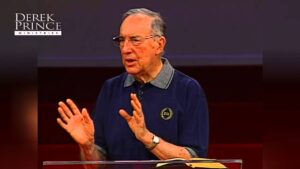
I learned these from revelation from the Lord after the Father spoke to me in 1972 about the restoration of apostles and prophets. I was greatly help in my understanding by what I learned from Derek Prince.
1. Apostles Appoint Elders
This is the first and clearest apostolic responsibility:
“They appointed elders for them in every church…”
— Acts 14:23
“I left you in Crete to… appoint elders in every town.”
— Titus 1:5
Apostles establish local government but never replace it. This task seems humanly impossible given the size and scope of diversity within Christianity. I will save this for a later discussion.
2. Apostles Establish and Maintain Divine Order
Paul’s instruction to Titus is the apostolic summary:
“…that you should set in order what remains…”
— Titus 1:5
Apostles:
- correct disorder (1 Corinthians),
- defend the gospel (Galatians),
- warn elders (Acts 20:28–31),
- guard the foundation (1 Corinthians 3:10).
Apostles do not govern churches.
They ensure Christ’s government is reflected through the elders.
3. Apostles Bring Apostolic Doctrine to Elders
The “apostles’ teaching” (Acts 2:42) did not originate with local congregations.
It was delivered to them. The Apostles are the keepers of the Father’s doctrine given through His Son.
Paul emphasizes this repeatedly:
- “I laid a foundation…” (1 Corinthians 3:10)
- “Hold to the traditions you were taught by us…” (2 Thessalonians 2:15)
- “Teach no other doctrine…” (1 Timothy 1:3–4)
Apostolic doctrine flows to the elders, who guard it in their city. If they stray from this doctrine, apostles can bring correction. The doctrinal error can be contained until it is cured. This is impossible in top down hierarchical institutions.
4. Apostles Equip Elders — and All Saints — for Ministry
This is the equipping ministry of Ephesians 4:
“And He gave some to be apostles…
for the equipping of the saints for the work of ministry…”
Ephesians 4:11–12
Apostles strengthen local leaders, and can disciple them, so they can strengthen the Body.
A Key Insight
The first three functions — appointing elders, setting divine order, safeguarding doctrine —
can only be performed by true Ephesians 4:11 apostles.
Other “apostolic” activities in modern usage:
- church planting
- missions
- leadership development
- revival work
- organizational strategy
These can be done by evangelists, teachers, prophets, elders, or any believer anointed by the Spirit.
But the four functions above belong exclusively to Jesus’ shaliachim.
This is about the relationship between the Apostles and the elders, and the apostles and the prophets.
III. The Trinitarian Origin of Apostolic Ministry
Called by the Father → Appointed by the Son → Sent by the Holy Spirit
Understanding the functions of apostles is essential.
But the New Testament also reveals where apostles come from.
This pattern is simple, powerful, and devastating to modern errors.
1. Called by the Father
“God… set me apart from my mother’s womb and called me by His grace…” Galatians 1:15–16
Paul’s calling is specific from birth — like Jeremiah (Jeremiah 1:5), Samson (Judges 13:5), and John the Baptist (Luke 1:15).
The phrase “before the foundation of the world” (Ephesians 1:4) applies to all believers, not just apostles.
But vocational callings are often from the womb.
2. Appointed by the Son
“And He gave some to be apostles…”
Ephesians 4:11
“He” = Jesus Christ, the risen Head.
Thus:
- apostles are not appointed by apostles, but are confirmed by the Holy Spirit
- not by networks
- not by denominations
- not by self-appointment
- not by popularity or gifting
Only Jesus Christ appoints apostles.
3. Sent by the Holy Spirit
“The Holy Spirit said, ‘Set apart for Me Barnabas and Saul for the work to which I have called them.’” Acts 13:2
“So, being sent out by the Holy Spirit…” Acts 13:4
The Spirit does not call apostles — He deploys the ones the Father has called and the Son has appointed.
This completes the divine pattern:
Calling → Father
Appointment → Son
Deployment → Holy Spirit**
IV. Apostolic Spheres: What Paul Actually Claimed
Another truth hidden in plain sight is the nature of apostolic responsibility.
Modern Charismatic leaders teach territorial apostles, while Cessationists deny any ongoing apostolic function.
Paul taught neither.
The New Testament shows that apostles do not hold governmental authority over a city or local church.
That authority belongs solely to the elders (Acts 14:23; Titus 1:5).
But apostles do carry enduring relational responsibility for the churches and regions Jesus assigns to them.
Paul’s own language is precise and instructive.
1. Apostles Are Assigned Fields of Labor — Not Territories of Rule
Paul writes:
“We will not boast beyond limits, but will boast only with regard to the sphere of ministry that God assigned to us…
that we may preach the gospel in lands beyond you, without boasting in another person’s sphere of labor.” 2 Corinthians 10:13–16
The key term is kanōn — a “measured field,” “assigned portion,” or “God-given area of labor.”
Important observations:
Paul does not claim territorial authority
Paul never says he governs Corinth, Ephesus, Thessalonica, or Galatia
Paul does not intrude into another apostle’s field
He refuses to work “in another man’s sphere.”
This alone dismantles modern apostolic territorialism.
Paul’s sphere expands relationally, not politically
“As your faith increases,” he says, “our sphere will be enlarged” (v. 15).
Growth in the believers expands Paul’s field — not apostolic decrees.
2. Apostles Maintain Ongoing Care, But Not Ongoing Control
Paul expresses deep, continual responsibility:
“There is the daily pressure on me of my anxiety for all the churches.” 2 Corinthians 11:28
“My little children, for whom I am again in the anguish of childbirth…” Galatians 4:19
“We were gentle among you, like a nursing mother taking care of her own children.” 1 Thessalonians 2:7
This is not government.
This is pastoral burden at an apostolic level,
a relational stewardship for churches he either founded, fathered, or was assigned to.
Apostles carry burden, not jurisdiction.
Apostles exercise influence, not positional authority.
Apostles provide foundation, not administration.
3. Government Belongs to Elders — Responsibility Belongs to Apostles
Apostles do not:
- preside over churches
- take seats of authority
- occupy ongoing governmental office
- replace elders
- assign themselves over regions
- build apostolic hierarchies
Instead, they:
- revisit churches (Acts 15:36)
- send co-workers (Titus, Timothy, Silas)
- correct doctrinal drift (Galatians; 1 Corinthians)
- strengthen believers (Acts 15:41)
- warn elders (Acts 20:28–31)
- encourage perseverance (1 Thessalonians 3:2–3)
This is what Paul means by a sphere — a God-assigned field, not a hierarchical domain.
4. A Clear Statement for the Blueprint
Here is the truth in its simplest form:
Apostles do not hold ongoing authority over a church or region,
but they do hold ongoing responsibility for the churches and regions Jesus assigns to them.
This preserves:
- Christ’s headship
- elders’ local government
- the apostolic foundation
- the relational nature of the New Testament
- and the simplicity of divine order
It also destroys:
- apostolic covering
- territorial apostles
- apostolic centers
- hierarchical networks
- apostolic appointment by men
Apostolic spheres are not political boundaries.
They are relational assignments under Christ the Head.
The Apostolic Blueprint in One Sentence
Apostles are called by the Father, appointed by the Son, and sent by the Holy Spirit as Jesus’ personal shaliachim to the elders of the local church.
This is the truth hidden in plain sight.
This is what the modern church — Charismatic or Cessationist — has missed.
And this is the Blueprint Jesus is restoring.
V. Why Women Cannot Be Apostles:
The Shaliach Principle, Headship, and the Misused Proof Texts
Modern Charismatic authors, such as Joni Ames — speaking for many Charismatic leaders — describe apostles as “spiritual fathers and mothers” who govern, activate, and undergird the Church. This not only confuses the nature of apostolic ministry; it introduces metaphors the New Testament never uses.
Apostles are not “mothers” or “fathers” to the Church.
They are Jesus’ shaliachim — His authorized representatives sent to the elders of the local church.
Paul was a father to the Corinthians because he birthed that congregation through the gospel (1 Corinthians 4:15) — not because he was an apostle. Apostleship does not make someone a father; relational, foundational involvement does. The New Testament never assigns apostles the role of “spiritual fathers” or “mothers” over the universal Church.
But the issue goes deeper.
To understand why women cannot be apostles, we must examine both:
- the nature of the apostolic role, and
- the Scriptures misused to defend female apostles.
When you actually study the Greek text of the passages used to defend female apostles, it becomes immediately clear that the modern idea rests on mistranslation choices, misreadings, and a misunderstanding of both the Hebrew shaliach and Paul’s own theology of headship and church government.
In the early 1970s, we came to these conclusions while studying the Greek New Testament with Derek Prince, who was an expert in Greek language, Greek literature, and classical grammar. At the same time, we were working with Rabbinic scholars at Hebrew University who were studying the Gospels and the writings of Paul — using the King James Bible — to better understand late Second Temple Judaism, the very world that shaped Paul’s thinking.
Both Derek and the Rabbis arrived at the same point of agreement:
The New Testament provides no linguistic, cultural, theological, or governmental basis for a female apostle — and every modern “proof text” collapses under proper Jewish and grammatical examination.
A. The Apostolic Role Requires Representational Headship
A shaliach represents the Sender — in this case, the risen Messiah — in matters of authority, order, and doctrine.
Paul explicitly anchors this representational function in the headship structure:
“The head of every man is Messiah;
the head of a woman is the man;
and the head of Messiah is God.”
1 Corinthians 11:3
Apostles carry Christ’s authority to male elders.
This is a representational function, not a general congregational ministry.
B. Apostles Are Sent to Elders — Not to the Congregation Generally
The four apostolic functions all require direct engagement with elders:
- delivering Christ’s doctrine
- establishing and maintaining divine order
- correcting error and disorder
- appointing qualified elders
These responsibilities assume the apostle stands over elders temporally, as Christ’s representative, in order to set foundational order.
Scripture assigns governing authority to male elders (1 Timothy 3; Titus 1).
Therefore the shaliach sent to them must align with the headship pattern Paul teaches.
C. Women Can Be Sent — But Not as Apostolic Shaliachim
Scripture affirms that women can:
- prophesy (Acts 2:17; Acts 21:9)
- teach within proper contexts (Acts 18:26; Titus 2:3–5)
- serve as deacons (Romans 16:1)
- evangelize (John 4; Luke 24)
- operate in spiritual gifts (1 Corinthians 12:7–11)
Women are fully empowered by the Spirit.
But no woman in Scripture:
- is called an apostle
- is appointed by the risen Christ as an apostle
- functions as a shaliach to elders
- performs the four apostolic functions
- or represents Christ to the governing body of a church
This is not about value, gifting, or dignity.
It is about function, order, and representation.
Very few men are called to be apostles, and fewer still understand the weight and cost of such a calling. The same is true for the prophets. The pattern in the New Testament makes this plain: apostolic ministry involved suffering, sacrifice, and a lifelong commitment to Christ’s authority and the churches under His care.
This follows the same principle seen in the Old Testament priesthood:
not everyone qualifies for every role within God’s covenant people.
The qualifications for both priesthood and apostleship are not determined by human aspiration but by the Father’s sovereign choice and established order.
D. Paul Could Not Appoint a Woman as an Apostle
Paul’s apostolic work required him to:
- instruct elders (Acts 20:28–31)
- correct elders (Galatians 2:11–14)
- rebuke elders (1 Timothy 5:20)
- appoint elders (Acts 14:23; Titus 1:5)
- guard doctrine (1 Timothy 1:3)
- set divine order (1 Corinthians 11–14)
These are representational acts, impossible to fulfill outside the headship order Paul teaches.
E. Why the “Female Apostle” Proof Texts Do Not Prove Female Apostles
How mistranslations and misreadings create an illusion
Those who argue for female apostles rely almost entirely on four passages:
- Romans 16:7 — Junia
- Philippians 2:25 — Epaphroditus called “your apostolos”
- Acts 14:14 (used indirectly, as evidence that the term is flexible)
- “Everyone is sent” passages (Luke 10; Matthew 28; John 20)
All four collapse once we apply:
- the Hebrew shaliach
- Paul’s headship theology
- the four apostolic functions
- and the actual context of the passages
I. Romans 16:7 — Junia
The most misinterpreted verse in the debate
The phrase “outstanding among the apostles” can mean either:
- “Junia is an apostle,” or
- “Junia is well-known to the apostles.”
Only the second fits the context.
Reasons:
- Junia is listed with her husband, Andronicus — like other husband-wife ministry pairs, never apostles.
- Paul never calls her a shaliach.
- She performs none of the apostolic functions.
- Greek literature overwhelmingly uses the phrase to mean “well-known to.”
- Paul forbids women from exercising governing authority over men (1 Timothy 2:12), which an apostle must do toward elders.
Conclusion:
Romans 16:7 does not present a female apostle — and never did until the late 20th century.
II. Philippians 2:25 — Epaphroditus “Your Apostolos”
Paul uses apostolos in the generic Greek sense:
- a messenger
- a delegate
- someone sent from one church to another
Epaphroditus did not:
- set doctrine
- correct elders
- appoint elders
- establish divine order
This passage proves the opposite:
apostolos does not equal New Covenant apostle.
III. “Everyone is Sent” (Luke 10; Matthew 28; John 20)
Yes, Jesus sends:
- the 70
- disciples
- evangelists
- prophets
- missionaries
- all believers
But sentness does not equal apostleship.
Only apostles:
- appoint elders
- correct elders
- guard doctrine
- establish divine order
- equip elders
No woman in Scripture performs these acts.
IV. The Hebrew Shaliach Makes Female Apostles Impossible
A shaliach must represent Messiah to male elders in matters of:
- correction
- doctrine
- appointment
- discipline
- order
This role is inseparable from Paul’s headship theology:
- 1 Corinthians 11:3
- 1 Timothy 2:12
- Ephesians 5:23
A woman cannot fulfill this representational function without overturning Christ’s design for authority.
My hope this has been helpful in bringing clarity to a difficult subject. At the very least it should start a conversation that helps us find the mind of Christ in all things concerning His church.
Thanks for reading,
Blessings
Rick Fox
Join The Community!
Sign-up to the newsletter to receive exclusive content and news from [Author Name]